Visiting McDonald Observatory
September 7–8, 2007
Gerry Trione, Rex Ross and Julian Lamborn visited the University of Texas McDonald Observatory near Fort Davis, Texas. The purpose of the visit was to tour the facilities and learn about HETDEX, the exciting major new research project investigating “dark energy.”
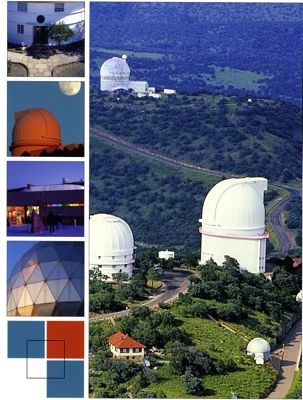
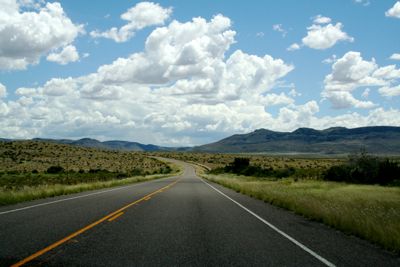
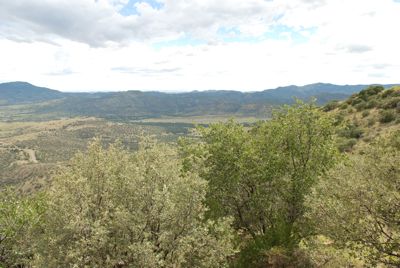
The drive from Midland Airport to McDonald Observatory in the Davis Mountains went through some beautiful country.
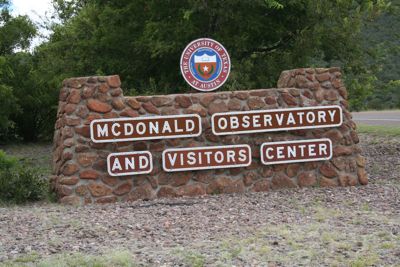
We arrive at the site.
David Lambert, Director of the McDonald Observatory, graciously accommodated us in his lodge at the site.
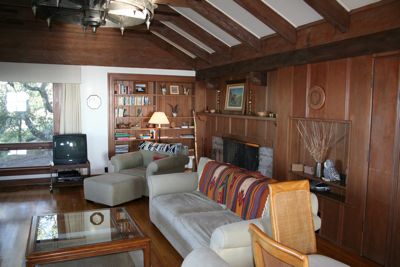
The Lambert Lodge is quite nice.
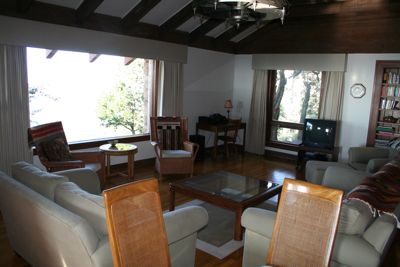
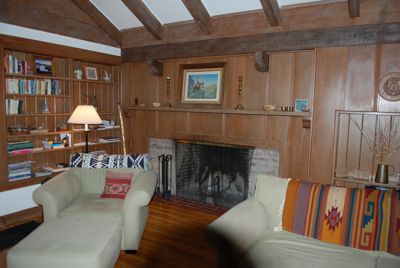
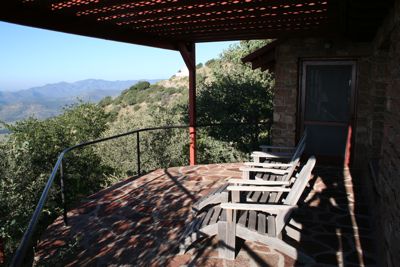
The views from the deck of Lambert Lodge were spectacular.
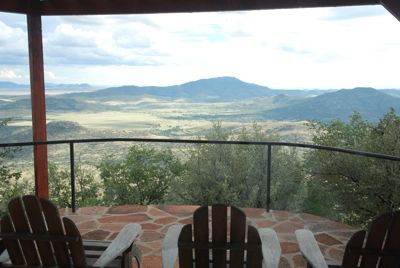
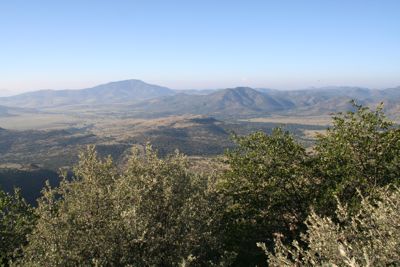
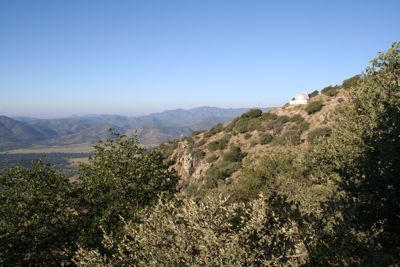
Director David Lambert (second from right) welcomes us to McDonald and discusses the agenda for our stay.
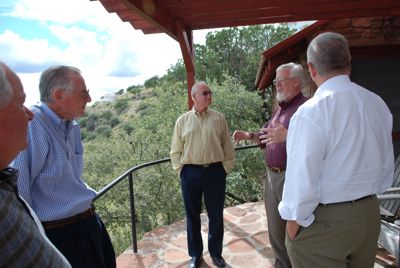
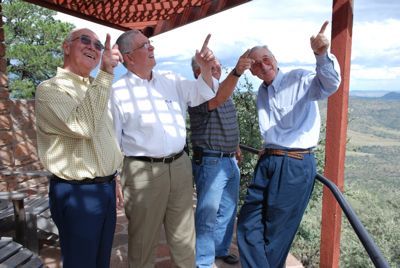
Left to right: Julian Lamborn, Joel Barna (U.T. Development Manager for McDonald Observatory), Don Wallace (Superintendent of McDonald Observatory) and Rex Ross identify either a new supernova or a Southwest Airlines jet.
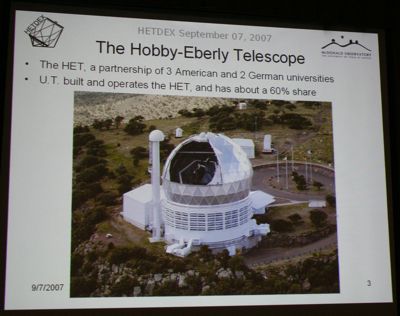
Hobby-Eberly Telescope
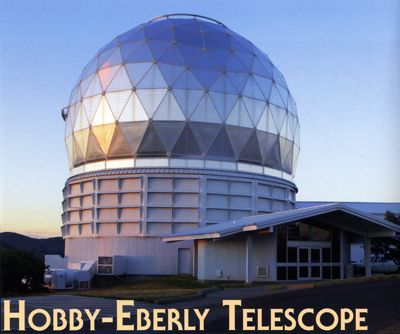
Mirror weight: 26,000 pounds
Mirror diameter: 36 feet
Telescope weight: 160,000 pounds (80 tons)
Dedicated: October 8, 1997
Gary Hill (left), Senior Research Scientist and Chief Astronomer, joined us for our first stop: the Hobby-Eberly Telescope.
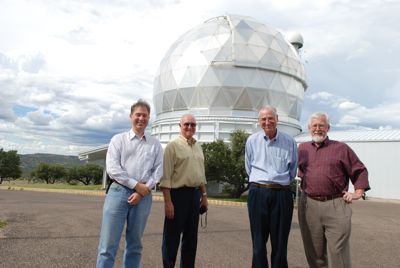
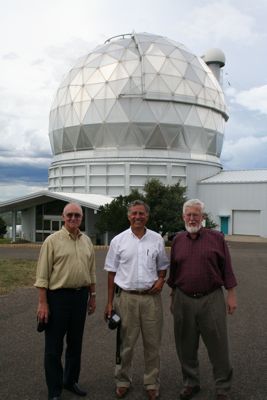
The 9.2-meter mirror of the HET can be seen in the center of each photo.
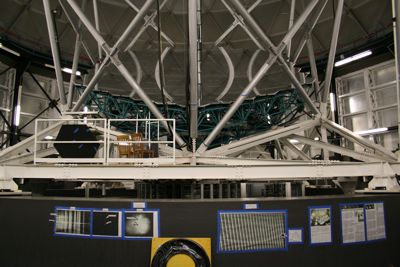
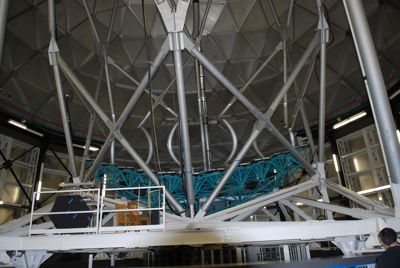
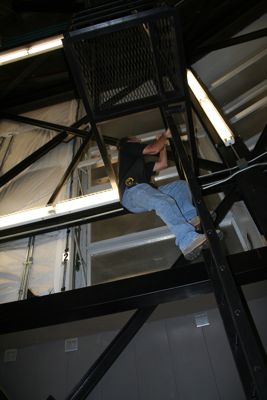
A staff member climbs the structure to make some adjustments.
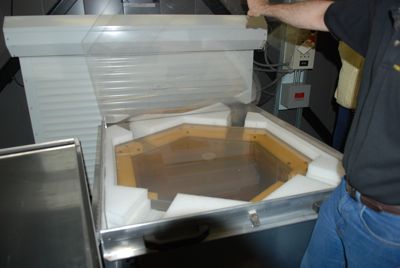
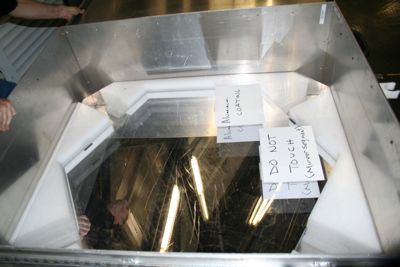
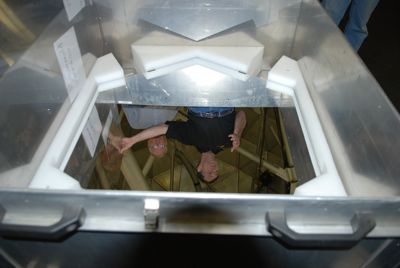
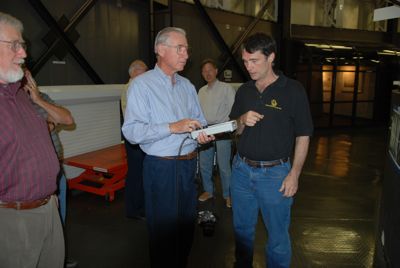
HET Site Manager Bob Calder (right) shows a replacement mirror for one of the telescope’s 91 hexagonal segments.
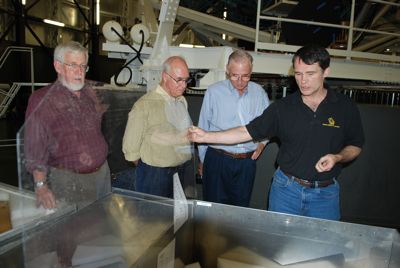
Each hexagonal segment is quite delicate, with an aluminum reflective coating 900 angstroms thick.
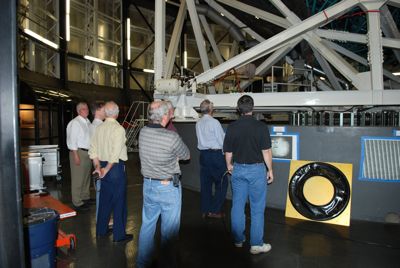
Our group examines the telescope’s 80-ton structure.
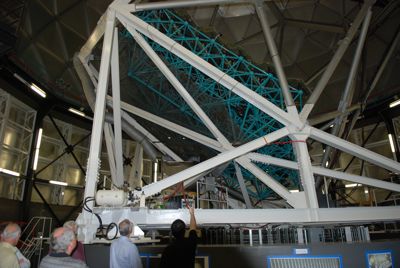
Rex, closely supervised by Bob Calder, is allowed to “drive” the telescope into the proper position.
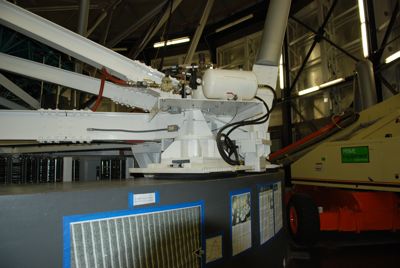
The side louvers of the telescope building can be opened as part of the temperature controls.
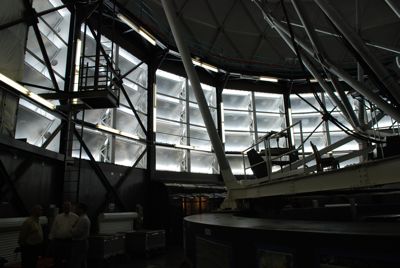
HET Control Room
In the control room, HET Telescope Operator Eusebio Terrazas monitors computer screens showing the telescope’s position, operation and alignment.
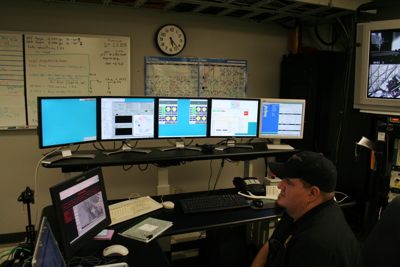
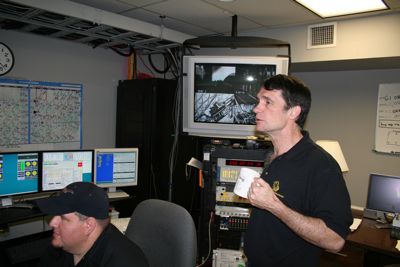
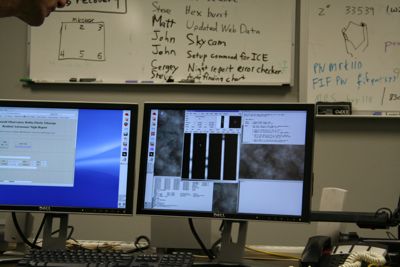
HET Site Manager Bob Calder explains the operation of the telescope. Additional screens monitor the digital image being recorded.
Gerry ponders improvements to the telescope that he would like to suggest.
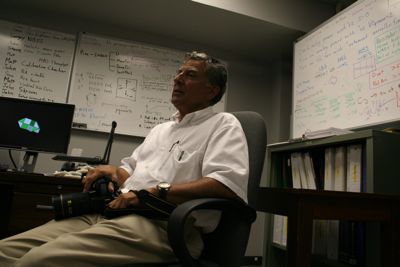
Our group discusses the operations and research activities associated with HET.
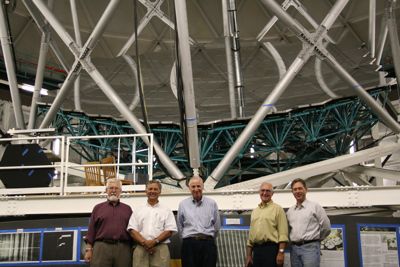
Left to right: David Lambert, Gerry Trione, Rex Ross, Julian Lamborn and Gary Hill pose for a last photograph with the HET.
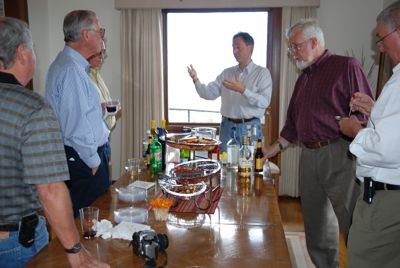
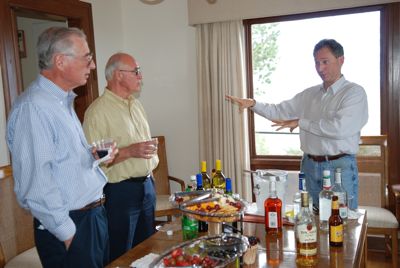
Back at Lambert House for a pre-dinner cocktail and further discussion.
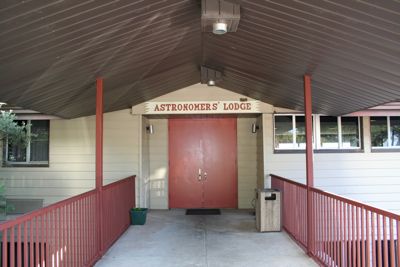
We adjourn to the Astronomer’s Lodge for dinner.
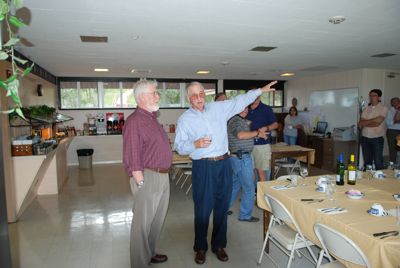
Rex comments on Director Lambert’s research project involving stars with no hydrogen (trust me—that’s a peculiar type of star).
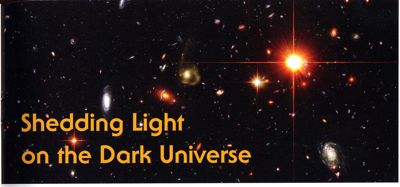
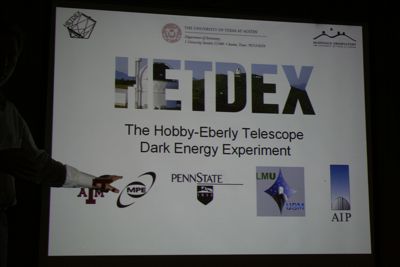
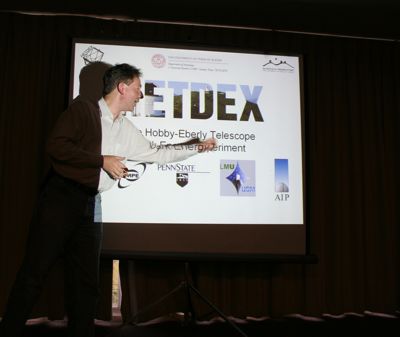
HETDEX: The Hobby-Eberly Telescope Dark Energy Experiment
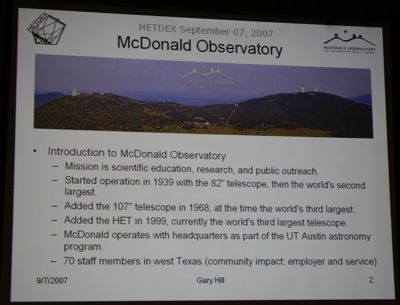
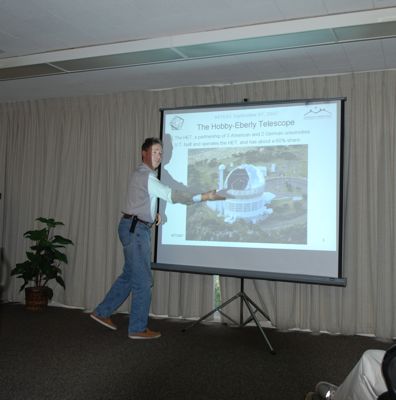
After dinner, Gary Hill provides an in-depth review of the HETDEX project that he is leading.
The Issue Simplified (with apologies to the cosmological community)
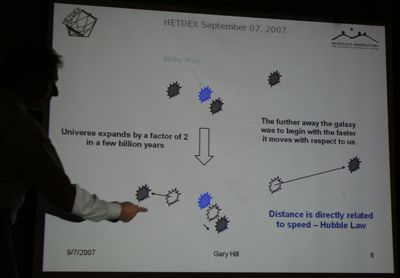
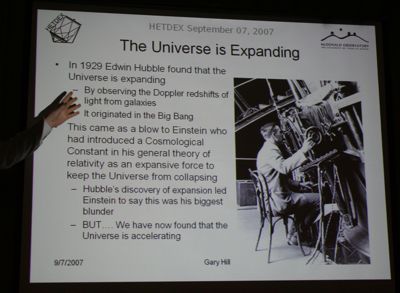
Several decades ago it was determined that the universe is expanding.
More recently, it has been determined that the rate of that expansion is accelerating.
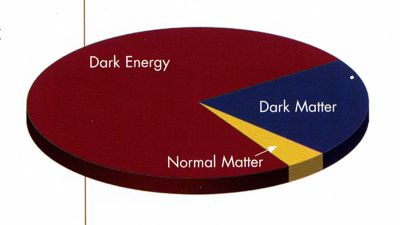
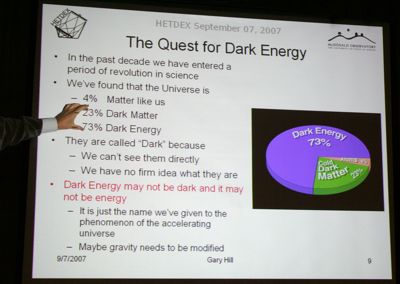
No one yet understands the mechanism causing that acceleration. One theory is that some “dark energy,” which we cannot yet see or measure, may be that mechanism.
HETDEX will examine two million galaxies to map how fast galaxies are moving away from us, as a basis for attempting to understand what this “dark energy” may be.
As Gary Hill clearly noted in his presentation, “dark energy” may not be dark and may not be energy. Therein lies the puzzle that Gary’s project will attempt to unravel.
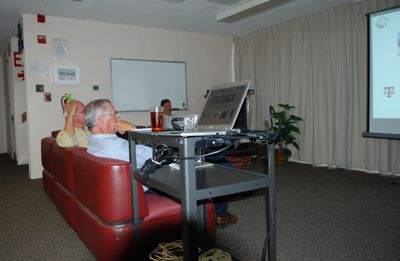
Julian and Rex ponder Gary’s presentation.
Harlan J. Smith Telescope
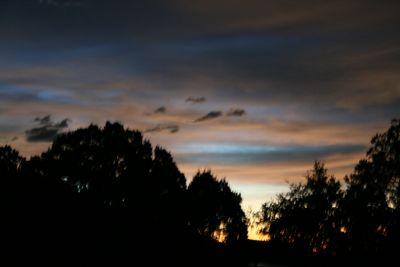
Following the review of HETDEX, a beautiful sunset greets us as we make our way to visit the Harlan Smith Telescope.
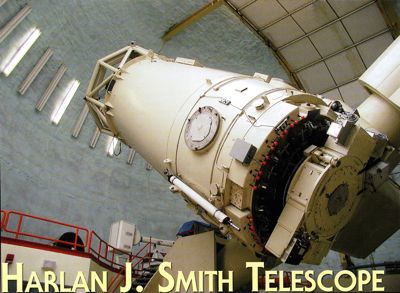
Mirror diameter: 107 inches
Telescope weight: 320,000 pounds (160 tons)
Length: 32 feet
Dedicated: November 26, 1968
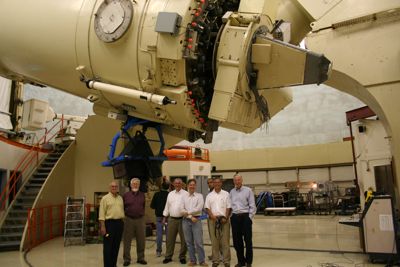
The 107-inch Smith telescope towers over our group.
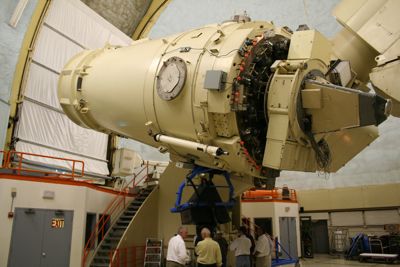
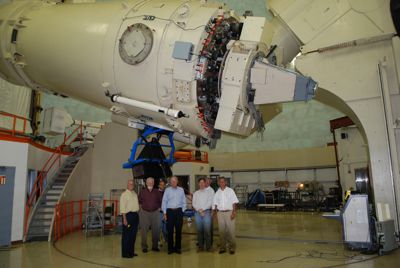
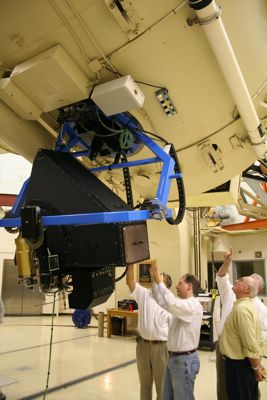
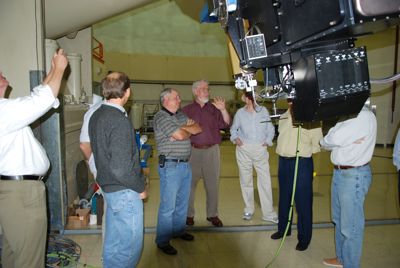
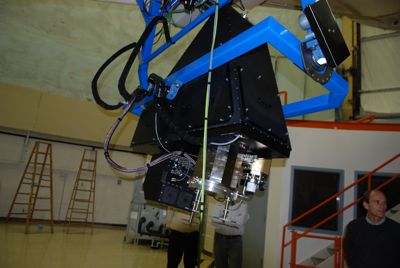
Gary Hill and David Lambert explain the newly designed spectrograph—the black unit at the base of the telescope—built by Gary’s team as the key element for HETDEX.
The specially designed spectrograph is named Visible Integral-Field Replicable Unit Spectrograph (VIRUS). Once operational, HETDEX will employ 145 VIRUS units linked together, permitting HET to examine 10,000 galaxies each night.
Another group photograph in the shadow of the Smith Telescope.
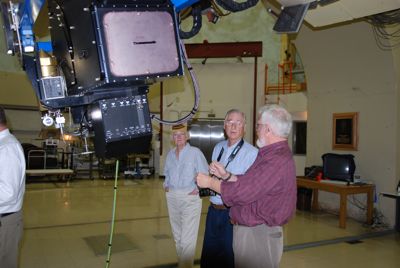
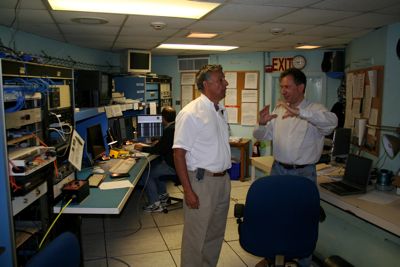
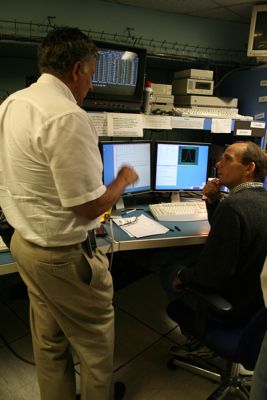
In the Smith Telescope control room, Gerry discusses the shape of the solar system with Gary Hill (left) and explains finer points of photons to Phillip MacQueen, McDonald Chief Scientist (right).
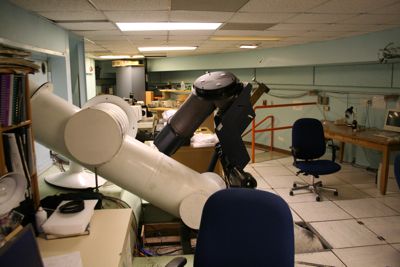
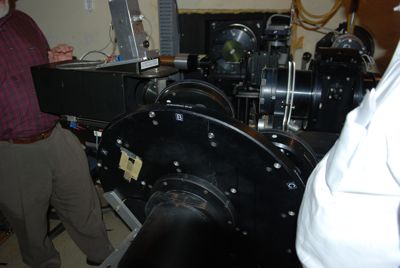
Part of the instrumentation that directs light from the Smith Telescope to the spectroscopy laboratory on a lower level is shown here.
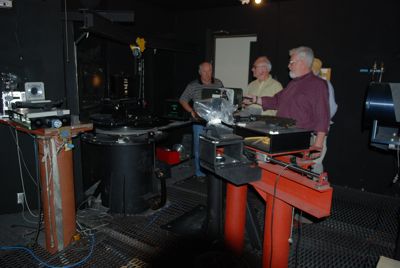
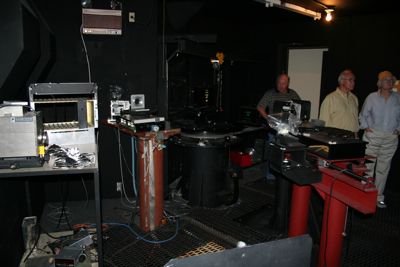
Director Lambert explains the spectroscopy laboratory, where the nature of stars, galaxies and other objects is deduced by examining the spectrum of their light.
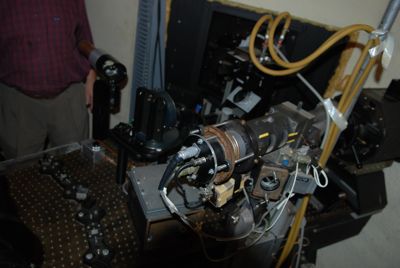
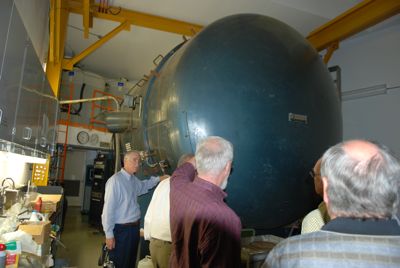
The pressure chamber used to recoat the reflective surface of the Smith Telescope lens is discussed.
Otto Struve Telescope
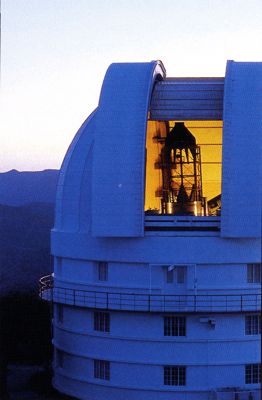
Mirror diameter: 82 inches
Telescope weight: 90,000 pounds (45 tons)
Length: 27 feet
Dedicated: May 5, 1939
David Lambert explains the layout of the Otto Struve Telescope.
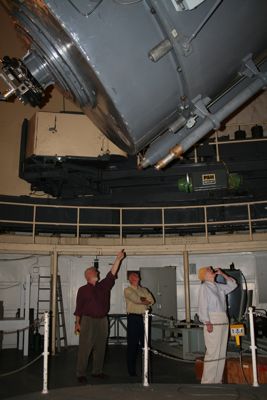
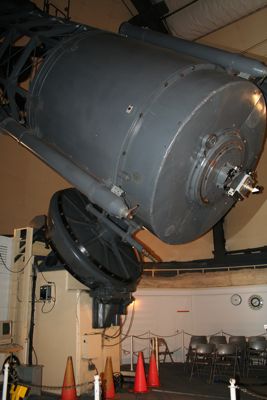
This telescope has an eye-viewing lens at its base, unlike more modern instruments, which acquire digital images.
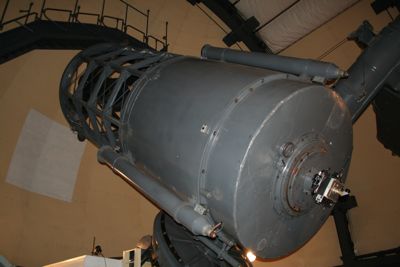
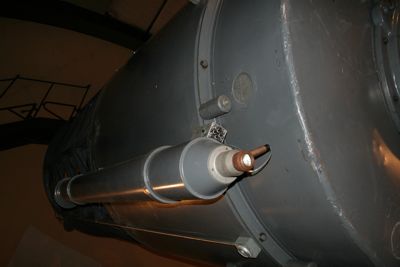
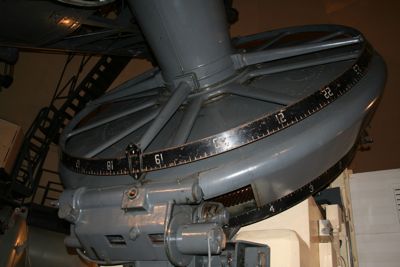
Early telescopes often included a small “spotting scope,” shown at left, and angular degree scales, shown at right, to help locate objects. Current telescope alignment is fully computer controlled.
Nevertheless, when the Struve Telescope was dedicated in 1939, it was the second-largest telescope in the world and one of the most technologically advanced.
Following a hearty breakfast the next morning, Julian, Rex and Gerry pose for a farewell photograph.
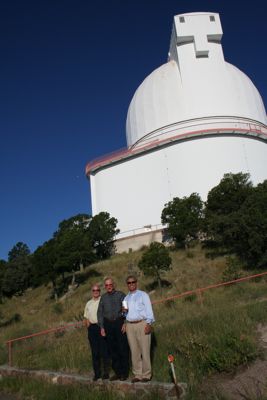
Our fascinating exposure to the McDonald Observatory staff, facilities, operations and research programs comes to an end.